Is White Rice High FODMAP?
White rice is the clinical gold-standard low FODMAP, low-residue carbohydrate for IBS and IBD patients. Made almost entirely of amylose and amylopectin starch, white rice is broken down by salivary and pancreatic amylase in the upper small intestine and absorbed completely as glucose, leaving zero unabsorbed fermentable sugars for colonic bacteria.
1 cup cooked (190g)
Safe for most sensitive digestive tracts
No FODMAP limit (low residue staple)
Exceeds colonic tolerance limit
1 hours
No fermentation lag (rapid upper GI absorption)
How White Rice affects your digestive tract
Amylase enzymes completely hydrolyze cooked white rice starch into glucose in the duodenum and jejunum. It leaves negligible unabsorbed substrate for colonic microbial fermentation.
Common symptom manifestations
Gentle alternatives to White Rice
Easily digestible long-grain rice with low residue.
Lower glycemic response with identical low-FODMAP tolerance.
Safe staple for Asian noodle dishes without wheat fructans.
Test your personal tolerance for White Rice
FODMAP tables provide population averages. Some people tolerate White Rice without issues, while others react to small trace amounts.
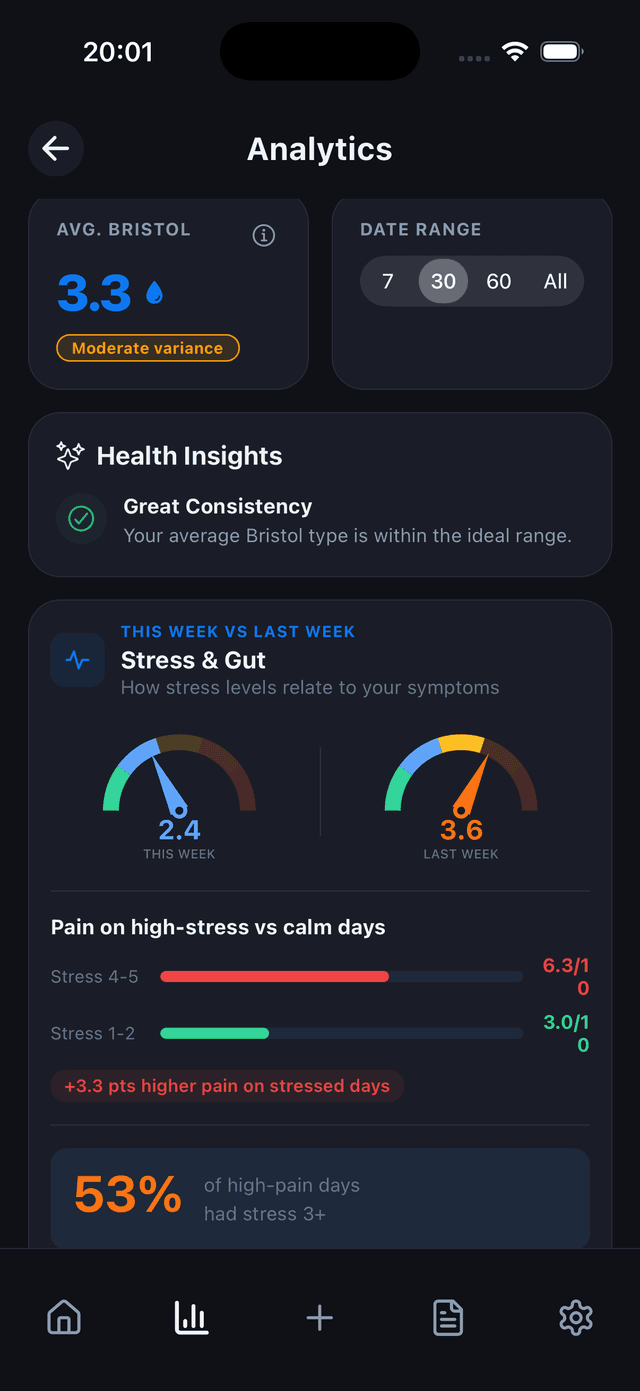
GutLog 1.5.6 includes an Active Diet Tracker with a 3-Phase Elimination Stepper. Test individual food challenge groups with automatic 3-day washout countdowns and 4-hour tag deduplication.
- Tests reactions across 6 digestion lag windows (2h to 36h)
- Calculates Poisson arrival baseline rates and lift scores
- Monitors symptom deltas for pain, bloating, and stool form
- Operates 100% on-device with zero cloud health tracking
Frequently asked questions about White Rice
Is brown rice better than white rice for IBS?
Not always. Brown rice contains the fibrous bran layer, which can mechanically irritate hypersensitive intestines in IBS-D patients.
Can white rice cause constipation?
Because white rice is low-residue, it slows bowel transit. Patients with IBS-C should pair it with low-FODMAP soluble fibers.
Does cooled rice develop resistant starch?
Yes. Cooking and cooling white rice forms type-3 resistant starch, which mildly feeds beneficial Bifidobacteria in the colon.
Track White Rice in your daily food log
Download GutLog for iPhone. Free to start, no account required, completely private.
Download on the App Store