Are Peanuts High FODMAP?
Peanuts and pure peanut butter are naturally low FODMAP and contain negligible fermentable carbohydrates. However, peanuts are roughly 50% fat by weight. High fat intake stimulates the release of cholecystokinin (CCK) and peptide YY, which can trigger an exaggerated gastrocolic reflex in patients with visceral hypersensitivity, causing urgent postprandial cramping or diarrhea 1 to 3 hours after eating large portions.
32 nuts / 2 tablespoons peanut butter (28g)
Safe for most sensitive digestive tracts
100g+ (due to lipid gastrocolic stimulation)
Exceeds colonic tolerance limit
2 hours
1 to 3 hours (lipid gastroduodenal reflex)
How Peanuts affects your digestive tract
High lipid concentrations entering the duodenum trigger duodenal brake and cholecystokinin release. In IBS-D patients, this produces rapid colonic propagating contractions even in the absence of fermentable sugars.
Common symptom manifestations
Gentle alternatives to Peanuts
Strictly low FODMAP at 2 tablespoons (28g) without high-FODMAP molasses or syrups.
Safe up to 2 tablespoons (20g).
Safe up to 30g with lower lipid gastrocolic sensitivity.
Test your personal tolerance for Peanuts
FODMAP tables provide population averages. Some people tolerate Peanuts without issues, while others react to small trace amounts.
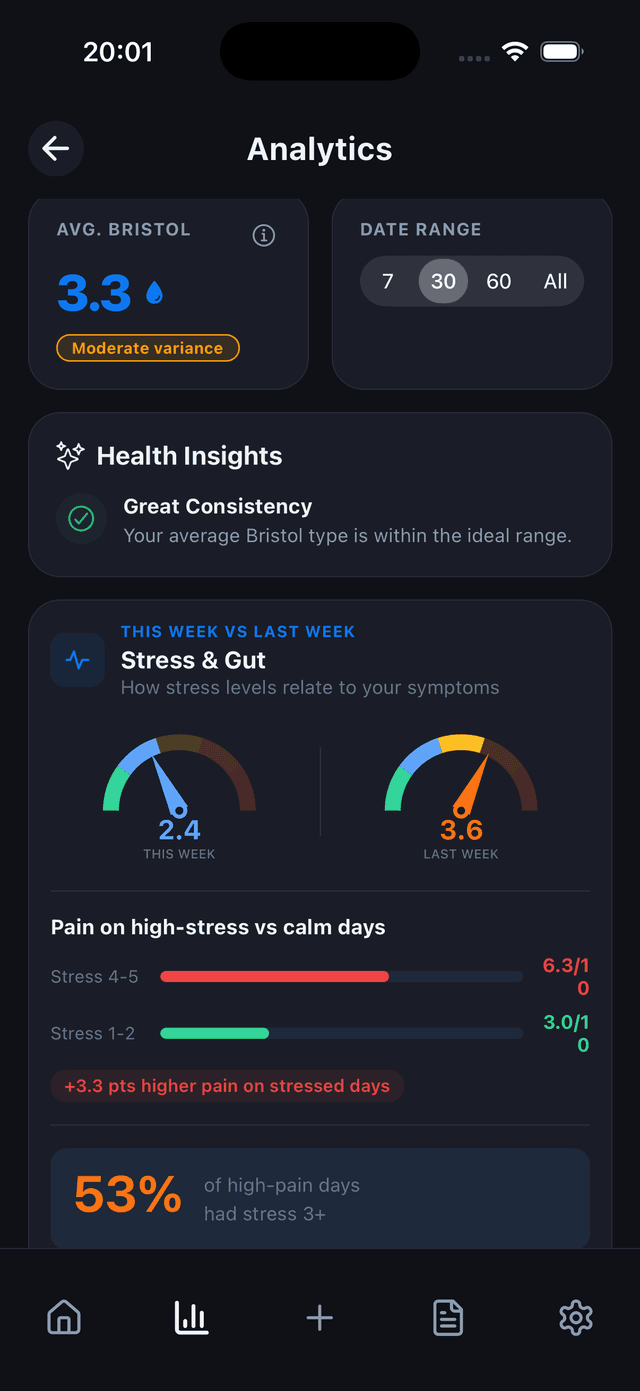
GutLog 1.5.6 includes an Active Diet Tracker with a 3-Phase Elimination Stepper. Test individual food challenge groups with automatic 3-day washout countdowns and 4-hour tag deduplication.
- Tests reactions across 6 digestion lag windows (2h to 36h)
- Calculates Poisson arrival baseline rates and lift scores
- Monitors symptom deltas for pain, bloating, and stool form
- Operates 100% on-device with zero cloud health tracking
Frequently asked questions about Peanuts
Why does peanut butter give me diarrhea if it has no FODMAPs?
The high fat content stimulates the gastrocolic reflex, which prompts the colon to contract and evacuate prematurely.
Are dry roasted peanuts safe for IBS?
Yes, provided the seasoning does not include onion powder, garlic powder, or milk solids.
Can peanuts cause acid reflux?
Yes, high dietary fat relaxes the lower esophageal sphincter, allowing stomach acid to back up into the esophagus.
Track Peanuts in your daily food log
Download GutLog for iPhone. Free to start, no account required, completely private.
Download on the App Store