Is Coffee High FODMAP?
Black coffee is chemically low FODMAP, but it is one of the most common non-FODMAP gut irritants. Caffeine stimulates the release of gastrin and cholecystokinin, which triggers the gastrocolic reflex within 15 to 45 minutes of consumption. In people with IBS-D or visceral hypersensitivity, coffee accelerates rectosigmoid motor activity, provoking sudden urgency, cramping, and loose stools.
1 espresso or 1 cup drip (250ml)
Safe for most sensitive digestive tracts
3+ cups or sugary milk preparations
Exceeds colonic tolerance limit
1 hours
15 to 45 minutes (gastrin stimulation)
How Coffee affects your digestive tract
Caffeine and chlorogenic acids stimulate gastric acid secretion and colonic peristalsis. The accelerated transit bypasses normal colonic water absorption, resulting in loose, urgent stools regardless of FODMAP presence.
Common symptom manifestations
Gentle alternatives to Coffee
Brewing with cold water produces up to 60% less titratable acid, reducing gastric irritation.
Contains L-theanine which moderates caffeine absorption, causing a gentler gastrointestinal response.
Naturally caffeine-free and low in tannins with zero fermentable carbohydrates.
Test your personal tolerance for Coffee
FODMAP tables provide population averages. Some people tolerate Coffee without issues, while others react to small trace amounts.
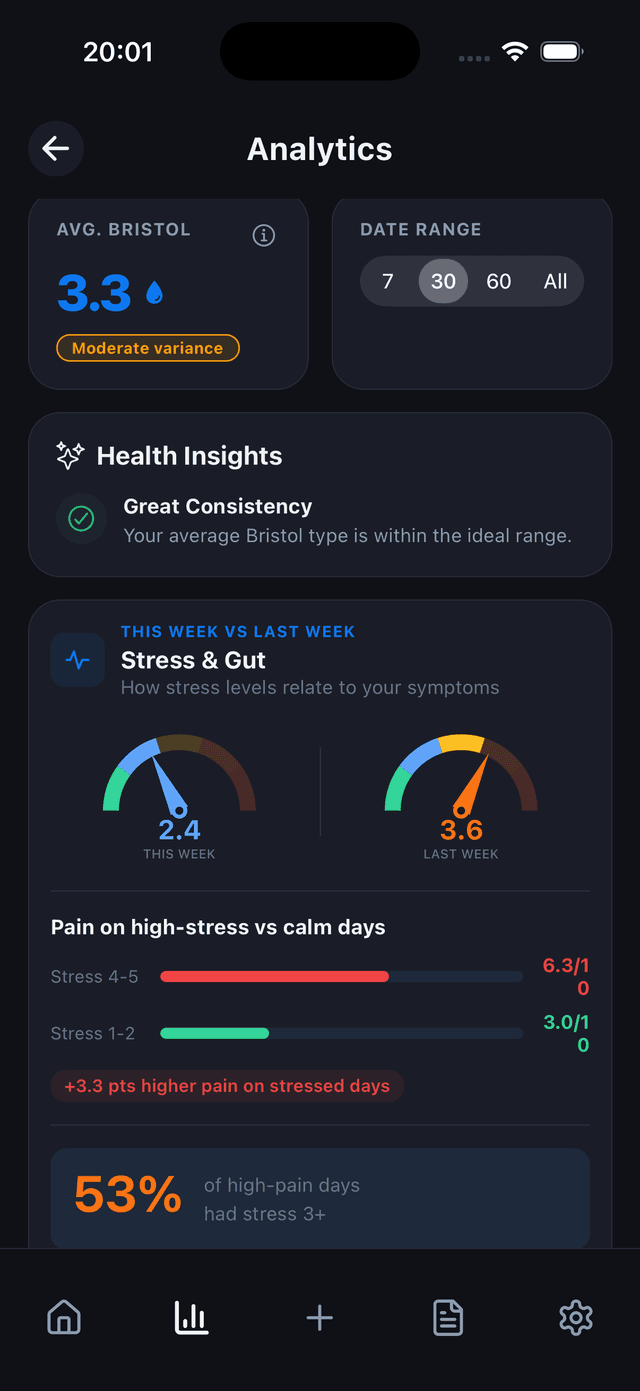
GutLog 1.5.6 includes an Active Diet Tracker with a 3-Phase Elimination Stepper. Test individual food challenge groups with automatic 3-day washout countdowns and 4-hour tag deduplication.
- Tests reactions across 6 digestion lag windows (2h to 36h)
- Calculates Poisson arrival baseline rates and lift scores
- Monitors symptom deltas for pain, bloating, and stool form
- Operates 100% on-device with zero cloud health tracking
Frequently asked questions about Coffee
Why does decaf coffee still cause bowel movements?
Decaffeinated coffee still contains chlorogenic acids and melanoidins that stimulate gastrin release and colonic motility, though to a lesser extent than caffeinated coffee.
Does adding milk make coffee worse for IBS?
Regular cow milk adds lactose to the caffeinated motility stimulus, creating a compounded osmotic trigger that frequently induces rapid diarrhea.
Can coffee cause constipation?
Coffee has a mild diuretic effect. If fluid intake is inadequate, it can lead to harder stool consistency later in the day.
Track Coffee in your daily food log
Download GutLog for iPhone. Free to start, no account required, completely private.
Download on the App Store