Prebiotics vs. Probiotics: What's the Difference?
If you've spent any time looking into gut health, you've run into both terms. They sound similar, they're often marketed together, and the distinction between them isn't always clear in the way they're explained. Getting this right actually matters — because they do different things, come from different sources, and aren't interchangeable.
The Short Version
Probiotics are live microorganisms — bacteria and sometimes yeasts — that, when consumed in adequate amounts, provide a health benefit. They're the actual microbes.
Prebiotics are types of dietary fiber and other compounds that your body can't digest but that your gut bacteria can ferment and feed on. They're the food for the microbes.
One way to think about it: if your gut microbiome is a garden, probiotics are seeds you're planting, and prebiotics are the fertilizer that helps what's already there (and what you've just planted) grow.
What Probiotics Actually Do
Probiotics temporarily introduce beneficial bacteria into your gut environment. They don't permanently colonize your gut — most transit through and are gone within days to weeks of stopping intake. But during their transit, they can compete with harmful bacteria, produce compounds that support the gut lining, and modulate gut immune responses.
The critical nuance: not all probiotic strains do the same things. "Probiotic" on a label tells you almost nothing useful. Lactobacillus rhamnosus GG has strong clinical trial evidence for reducing antibiotic-associated diarrhea. Bifidobacterium infantis 35624 has evidence specifically for IBS. A generic "10 billion CFU probiotic" from a supplement brand may not contain either of those strains, and its effects may be entirely different.
For IBS specifically, strains with the best current evidence include certain Bifidobacterium and Lactobacillus species. If you're considering a probiotic for IBS, it's worth looking up the specific strain rather than just the genus — or asking your doctor or pharmacist.
What Prebiotics Actually Do
Prebiotics feed the bacteria that are already living in your gut — particularly beneficial species like Bifidobacterium and Lactobacillus. By selectively feeding these species, prebiotics help support microbiome diversity and the production of short-chain fatty acids (like butyrate), which fuel the cells lining your colon and support gut barrier integrity.
Common types of prebiotic fiber include:
- Inulin and fructooligosaccharides (FOS) — found in garlic, onions, leeks, asparagus, and chicory root
- Galactooligosaccharides (GOS) — found in legumes and some dairy
- Resistant starch — found in cooked and cooled potatoes and rice, green bananas, and oats
Here's the catch: many classic prebiotic foods are also high in FODMAPs — the fermentable carbohydrates that are known IBS triggers. Garlic and onion are both rich in inulin and notoriously difficult for people with IBS to tolerate. This creates a genuine tension: what's great for microbiome diversity can also be a significant symptom trigger.
If you have IBS, the approach that tends to work best is introducing prebiotic foods slowly and in small amounts, to allow your gut microbiome time to adapt, rather than dramatically increasing them all at once.
Foods vs. Supplements
You can get both prebiotics and probiotics from food, and food sources have a meaningful advantage: they come packaged with other nutrients, fibers, and bioactive compounds that supplements don't replicate.
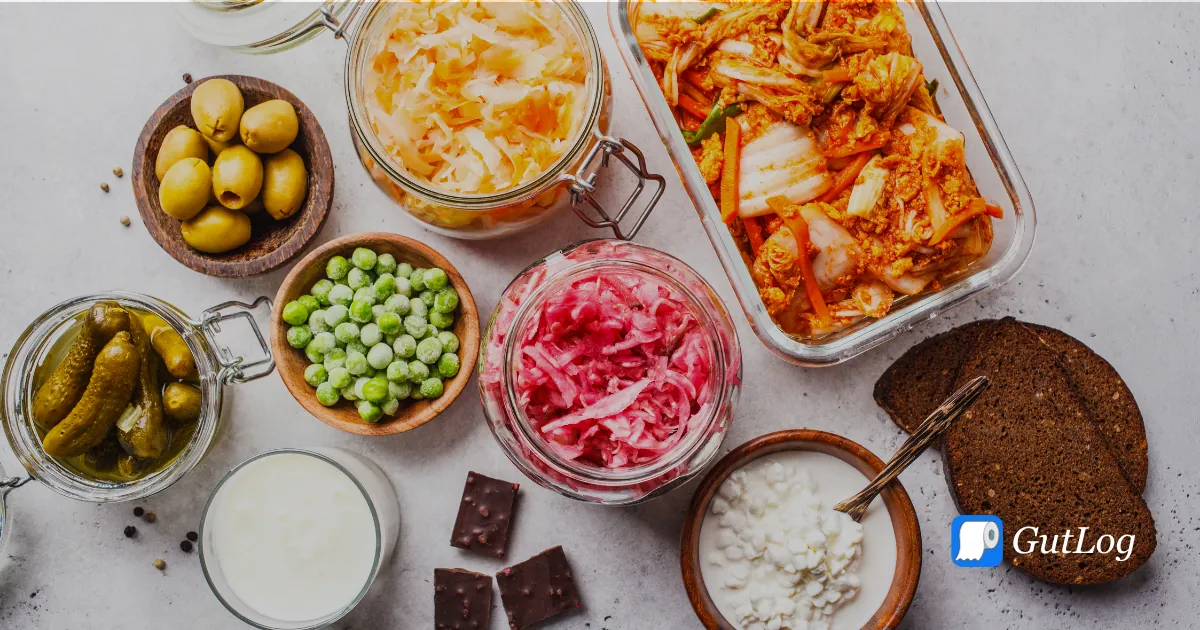
Probiotic foods: plain yogurt with live cultures, kefir, kimchi, sauerkraut, miso, tempeh, kombucha. A 2021 Stanford study found that a diet high in fermented foods increased gut microbiome diversity and reduced inflammatory markers more effectively than a high-fiber diet alone.
Prebiotic foods: oats, garlic, onion, leek, asparagus, green bananas, cooked and cooled potatoes, legumes.
Supplements are reasonable when food sources aren't practical, or when a specific strain with clinical evidence is needed for a specific condition. They're less well-regulated than medications, so quality matters — look for products that list specific strains and have third-party testing.
What About "Synbiotics"?
Synbiotics are products that combine prebiotics and probiotics — the idea being that including the prebiotic helps the probiotic bacteria survive and thrive. The research on synbiotics is promising but still developing. They're not necessarily better than getting prebiotics and probiotics separately from food.
Log how fermented foods affect your symptoms
If you're introducing probiotic or prebiotic foods and have IBS, tracking your symptoms alongside changes to your diet helps you find the approach that works for your gut specifically — not just what works on average.
Track your symptoms with GutLog
Log Bristol stool forms, track triggers, and sync with Apple Health. 100% private.
Frequently Asked Questions
Should I take a prebiotic or a probiotic first? If your gut microbiome is significantly disrupted (after antibiotics, a stomach illness, or a period of poor diet), starting with a probiotic to introduce beneficial bacteria, then supporting them with prebiotic foods, is a reasonable sequence. In practice, eating fermented foods alongside a varied plant-rich diet gives you both simultaneously without needing to think in sequences.
Do prebiotics or probiotics help with IBS? Both have evidence for IBS, but it's strain- and dose-specific. Certain probiotic strains have clinical trial support for reducing IBS symptoms. Prebiotic fiber — particularly partially hydrolyzed guar gum and some forms of resistant starch — tends to be better tolerated than classic prebiotic foods in IBS and has some evidence for symptom improvement.
Can you take too many probiotics? In healthy people, very large doses of probiotics are generally well-tolerated, though they can temporarily cause gas and bloating as the gut microbiome adjusts. In people who are immunocompromised or seriously ill, high-dose probiotics carry more risk and shouldn't be taken without medical guidance.