What Does Green Poop Mean? Causes & When to Act
Seeing green in the toilet bowl is the kind of thing that stops your morning cold. Before you start searching worst-case scenarios, here's the reassuring news: green poop is almost always benign, and the explanation is usually something you did in the last 24 to 48 hours.
How Stool Gets Its Color
Your stool gets its normal brown color from bile — a digestive fluid produced by your liver, stored in the gallbladder, and released into the small intestine to help break down fats. Bile starts out yellow-green, and as it moves through the digestive tract, gut bacteria and digestive enzymes transform it to the familiar brown color of a normal stool.
When stool turns green, it usually means one of two things: the bile didn't have enough time to complete that color transformation (fast transit), or you introduced something green or artificially colored into your system.
Common Causes of Green Poop
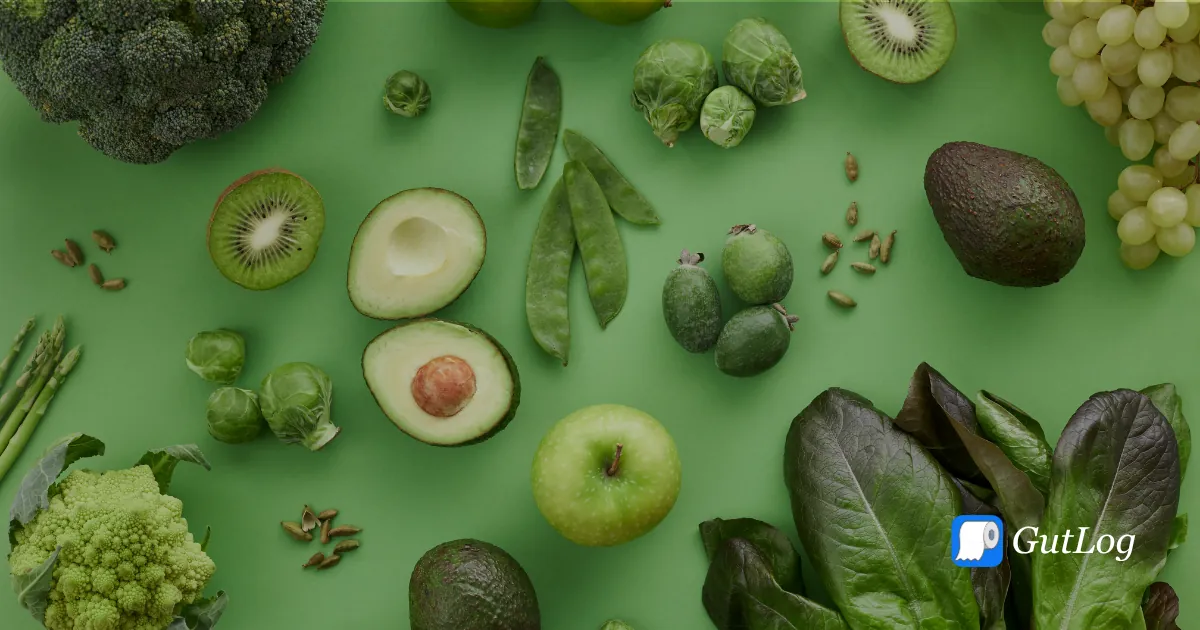
Food you ate. This is the most common cause by far. A green smoothie, a big salad, spinach, kale, broccoli, or any meal heavy in chlorophyll can tint your stool green. Artificially colored foods — green frosting, sports drinks, certain candies — can do the same. If this is the cause, your stool will return to normal within a day or two without any intervention.
Fast intestinal transit. When food (and stool) moves through your digestive tract more quickly than usual, the bile doesn't have enough time to finish its color transformation. This is why green stool is common during or after diarrhea, after taking laxatives, or during an IBS-D flare. You may also notice that the stool is looser than usual, which is consistent with this explanation.
Antibiotics. Antibiotics alter your gut bacteria — including the bacteria responsible for processing bile. This can temporarily shift stool color toward green or yellow until your microbiome stabilizes.
Iron supplements. Some iron supplements or multivitamins with iron can cause dark green or black-green stools. This is harmless and listed as a known side effect of many iron products.
Bile acid malabsorption. In some people, particularly those who've had their gallbladder removed or part of their small intestine, bile acids aren't fully reabsorbed and move into the colon, where they can cause loose, sometimes greenish stools alongside urgency.
When to Pay Attention
Green poop by itself, without other symptoms, is almost never a cause for concern. Pay attention if it's accompanied by:
- Severe or persistent abdominal pain
- Blood in the stool (red, maroon, or black and tarry)
- Fever
- Signs of dehydration — extreme thirst, dry mouth, dizziness, infrequent urination
- Diarrhea lasting more than a few days
If green stool appears alongside any of these, see a doctor. Green stool paired with significant amounts of blood or black tarry stools needs prompt medical attention, as this can indicate bleeding higher in the digestive tract.
What Green Poop Usually Isn't
Green stool is not typically a sign of infection, liver disease, or gallbladder problems on its own — those conditions tend to produce pale, clay-colored, or yellow stools (due to reduced bile output), not green. It's also not a specific sign of IBS, though people with IBS-D may see green stools more often simply because of faster transit times during flares.
Stool color is worth logging
Color changes are easy to forget by the time you're at a doctor's appointment. GutLog lets you note color alongside consistency, timing, and what you ate — so if a pattern does emerge, you have the data to show for it.
Track your symptoms with GutLog
Log Bristol stool forms, track triggers, and sync with Apple Health. 100% private.
The Bottom Line
Green poop is almost always caused by something you ate or by food moving through your system faster than usual. Give it a day or two. If it resolves without other symptoms, there's nothing to worry about.
Frequently Asked Questions
Is green poop a sign of infection? Occasionally — certain bacterial infections like Salmonella can cause green, watery diarrhea alongside fever, cramping, and nausea. But in those cases, the infection itself is causing the symptoms, not just the color change. Green poop without other symptoms is not a sign of infection.
Why is my poop green when I didn't eat anything green? The most common reason is fast transit — food moved through your gut quickly and bile didn't have time to complete its color change. This often happens during or after diarrhea, during a gut flare, or after taking laxatives.
How long does green poop last? If it's diet-related, one to two days. If it's related to a bout of diarrhea or a stomach bug, it usually resolves when the underlying issue does.